SAT specialists in induction sealing

Technical service of induction sealers

Technical support for manual, benchtop, continuous and in-line integrated induction sealers with a focus on airtight sealing, thermal stability and production continuity.

0
Years of experience
0
Hours of service
0
Teams served

Technical service of induction sealers

Specialized assistance for induction sealers with coverage in Spain and technical support for industrial projects in food, cosmetics, light chemicals, laboratory, industrial packaging.

Diagnosis, repair and maintenance for induction sealers

We work with induction sealers where the reliability of the closure and the continuity of the process are key to ensuring airtightness, hygiene and correct presentation of the packaging.

The intervention is not limited to simply restarting the machine. We check actual power, sealing stability, compatibility with lids and containers, line synchronization, and the equipment's thermal performance.

We handle electrical, electronic, mechanical and parameterization issues, as well as preventive maintenance aimed at avoiding defective seals, rejections and repetitive downtime.

Equipment and variants we support

Manual induction sealers, tabletop induction sealers, continuous induction sealers, integrated in-line equipment, solutions for cans, bottles and containers with lids

Related category of ARC induction sealers

Direct access to the general category of induction sealers to review models, formats and complementary solutions to the technical intervention.

View induction sealer category

Direct link to the related business category.

Manual, desktop and continuous models
Useful reference for comparing formats
Commercial support in addition to technical support

How to apply technical support

The better the information we receive from the team, the faster we can guide diagnosis, spare parts and intervention plan.

1. Indicate the model and type of container

We need to know if you work with specific cans, bottles or lids, as well as the production rate and whether the machine is manual, tabletop or continuous.

2. Send photos or video of the process

It helps to check the printhead, container path, lid, control panel, alarms, and whether the fault is due to incomplete sealing, power, temperature, or synchronization.

3. Describe the exact symptom

Please indicate if the problem is irregular sealing, improperly closed lid, overheating, power loss, sensor error, or line blockage.

4. We coordinate useful intervention

Based on that, we assess spare parts, pre-diagnosis, parameter adjustment, technical visit, or comprehensive review of integration with the line.

Conditions of technical service

Priority for critical equipment

We prioritize sealing machines that directly affect seal quality, product safety, and packaging continuity.

Diagnosis with process criteria

We cannot fix a problem by simply changing a component if the real cause lies in power, printhead height, lids, container path, or synchronization.

Multi-brand support when it pays off

We also explore other brands to see if there is a reasonable technical way to restore reliability without compromising the process.

Technical and coverage policy

Priority for ARC teams: Yeah.

Other brands: We also consider other brands when there is reasonable access to spare parts, schematics, and real technical feasibility of repair.

Coverage: National coverage and specific cases outside of Spain under prior planning, especially when the sealer is critical for production or traceability of the closure.

Guarantees and maintenance

Guarantee regarding the intervention

Exact coverage depends on the type of repair, components replaced, and the equipment's previous condition. You can find more information at our warranty page.

Recommended preventive maintenance

Especially useful on lines with high repetition rates, different package formats, or where a very stable closure is required. You can review the service at ARC preventive maintenance.

Actual closure validation

After intervention, it is advisable to check the stability of the seal with the actual lid and container, not just an isolated line vacuum test.

Coverage technique

We provide technical support for induction sealers in Spain and international cases where the equipment requires specialized intervention in power, sealing, control or synchronization with the line, with prior assessment of spare parts and production context.

Technical service in Spain

Nationwide coverage for diagnosis, maintenance, repair and tuning according to machine type and technical availability.

International coverage

Support for projects outside of Spain subject to machine, urgency, spare parts and intervention planning.

Coverage Notes

Final availability depends on the type of equipment, urgency, critical spare parts, and access to control, power, and line configuration.

Types of equipment that We repair

Manual and tabletop sealers

Review of power, working height and lid/container compatibility in compact and semi-autonomous equipment.

Compact format

🏭

Continuous sealers

Intervention in faster-paced teams where the repeatability of the sealing and the stability of the container flow are important.

Continuous production

🔗

Online integration

Support for machines that work in coordination with downstream transport, filling, capping and quality control.

Synchronization

🧴

Can and bottle formats

Adjust according to container geometry, material, height and lid type to improve the actual closure of the assembly.

Compatibility

Components and systems that we intervened

🌀

Head and coil

Review of emissions, working distance and stability of the induction process.

🔌

Generator and power

Diagnosis of performance loss, electrical instability, and uneven heating.

📡

Sensors and detection

Control of container passage, presence of lid and reading errors in production.

🎛️

PLC and HMI

Adjustment of times, recipes, alarms and operating parameters.

🚚

Tapes and guiding

Correction of misalignments, speeds and synchronization with the printhead.

💨

Ventilation and cooling

Overheating prevention and continuous performance protection.

🛠️

Structure and settings

Mechanical inspection of supports, height, guidance and working stability.

📦

Lid and container

Verification of actual compatibility between sealing material, cap and final product.

Common faults we review

  • incomplete sealing
  • lids that do not seal evenly
  • overheating
  • power loss
  • sensor errors or container passage
  • desynchronization with the line

Technical services specialized

We group the service by intervention families to accelerate diagnosis, spare parts and tuning.

Technical service for compact sealing machines+

For manual or desktop equipment where the failure is usually in power, height, lid or closing repeatability.

SAT desktop sealing machines
Header height check
Power adjustment
Correction of incomplete sealing
Diagnosis of improperly closed lids
Try with real packaging
Continuous line technical service+

Designed for equipment where the process depends on a stable pace, correct guidance, and synchronization with other modules.

SAT continuous sealers
Packaging step inspection
Sensor diagnostics
Speed and synchronization adjustment
Correction of repeated rejections
Online closure validation
Preventive maintenance of induction seals+

Useful for equipment with heavy use where preventing a deviation is worth more than stopping an entire line due to a faulty closure.

Power and stability check
Ventilation check
Sensor and guide control
Height and centering adjustment
Functional technical cleaning
Format validation

Technical guides and maintenance criteria

What to check before an induction sealer starts generating rejections

Many problems appear before the machine stops: lids that seal poorly, variation between containers, uneven heating, or small step errors.

A useful preventative review should include power, printhead height, container guidance, sensors, and actual testing with the format used by the customer.

  • Power and working distance check
  • Packaging step check and centering
  • Ventilation status and temperature
  • Cap and sealing material validation
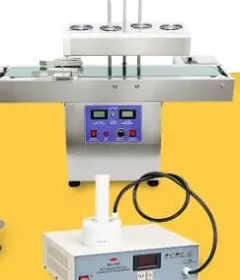
Typical faults in induction sealers that should be diagnosed correctly the first time.

Changing a component does not always solve the problem if the real source is in the interaction between lid, container, power and line speed.

Therefore, the repair must verify the complete behavior of the process, especially when the client works with different formats or high productions.

  • Sealing was correct in some containers and defective in others.
  • Loss of power after hours of work
  • Intermittent sensor errors
  • Misalignment between printhead and container

Basic technical checklist

  • induction heads
  • coils and generators
  • belts and conveyors
  • presence sensors
  • PLC and HMI panel
  • cooling and ventilation
  • power sources
  • container guidance and synchronization

Needs technical support for this type of machinery?

Contact ARC to review the incident, validate the technical scope, and determine whether repair, maintenance, power adjustment, or a complete intervention on line control, sealing, and synchronization is appropriate.

Frequently Asked Questions

Do you service induction sealers other than ARC?+

Yes, provided there is real technical feasibility, reasonable access to spare parts, and economic sense in the repair.

Can you help if the machine seals some lids but not others?+

Yes. That type of failure usually requires checking power, centering, height, cover, material, and speed.

Do you also do preventative maintenance?+

Yes. On high-volume lines, it's one of the best ways to avoid rejections, complaints, and unnecessary stops.